Migrating a Legacy Substation to IEC 61850: What We Learned
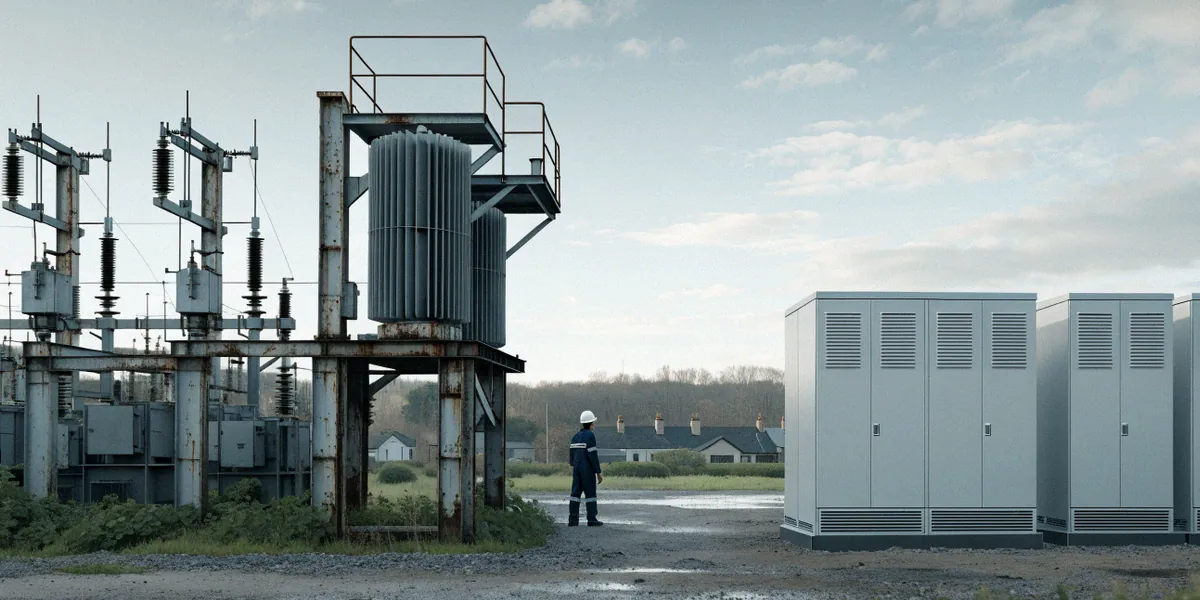
Most UK legacy substations were never designed for the digital substation era, yet they still form the backbone of our grid. The control panels we inherited at sites commissioned in the 1970s and 1980s were built around electromechanical relays, hardwired trip circuits and a design philosophy that assumed a human would always be standing nearby. Migrating those sites to IEC 61850 is not a simple rip-and-replace job. It is a multi-year programme of assessment, negotiation and compromise, and the lessons we have collected along the way are worth sharing before you start your own project.
Why Legacy Substations in the UK Are Reaching Their Limits
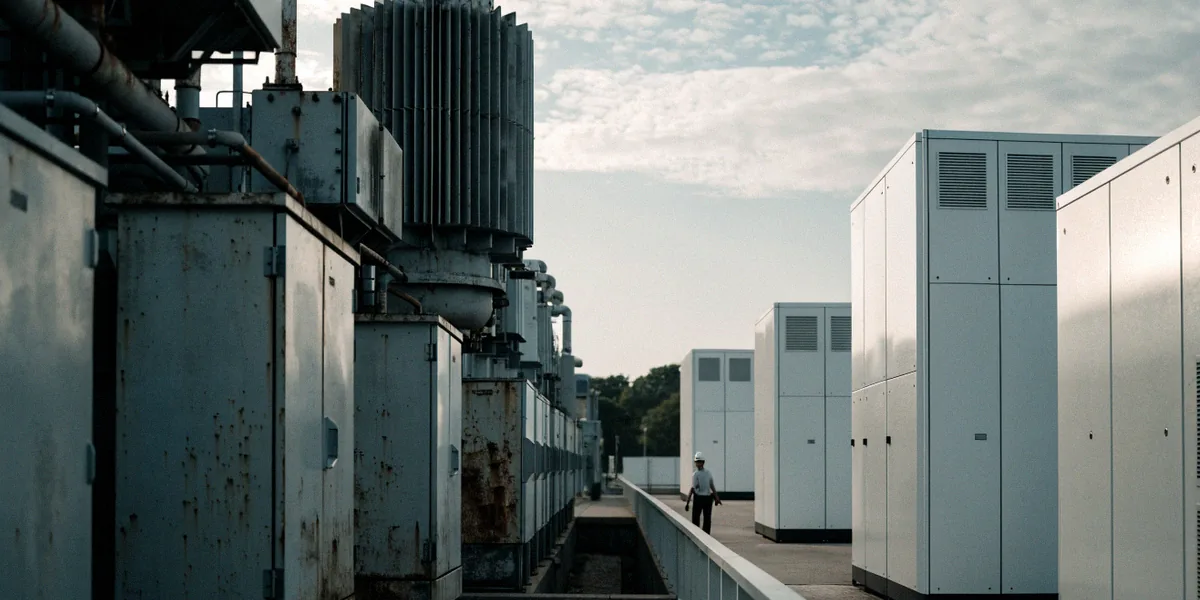
The ageing infrastructure problem is not abstract. National Grid operates 132kV and 275kV substations across the UK that are prime candidates for IEC 61850 migration, and many of them still run on protection schemes approaching or exceeding their design life. Spares for discontinued relays are scarce, fault-finding takes longer than it should, and the data these sites export to control centres is a fraction of what modern operations teams now expect. Ofgem’s RIIO framework drives investment in network reliability and data visibility, supporting digital substation upgrades, and that regulatory pressure has moved migration from a theoretical option to a funded priority for many network operators.
The copper-wire reality of hardwired I/O
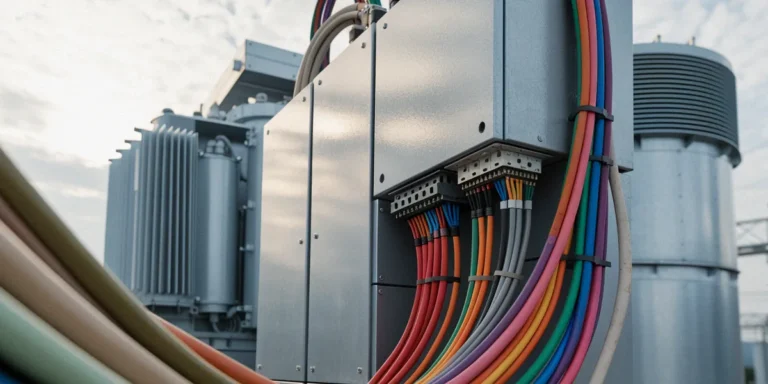
Every legacy panel we open tells the same story: hundreds of copper cores running from current transformers and voltage transformers to relay terminals, then out again to trip coils and indication lamps. Each core is a potential failure point, a maintenance burden, and a barrier to adding new functionality. When you want to introduce a new protection function or an additional measurement, you are physically pulling cable, terminating it, and testing it. IEC 61850 replaces that with a published data model and a network message, which is why the business case for migration usually rests on reduced cabling, faster modification, and richer operational data rather than on protection performance alone.
Regulatory and net-zero drivers pushing upgrades
Net-zero targets have changed what a substation is expected to do. Connections for distributed generation, battery storage and electric vehicle charging all require the substation to support active network management rather than passive distribution. Data visibility is central to that shift, and Ofgem’s RIIO framework has consistently rewarded operators who can demonstrate better monitoring and faster restoration times. A site that cannot publish real-time measurements in a structured format struggles to participate in flexibility markets or automated restoration schemes, which is a direct commercial disadvantage.
Planning the Migration: What We Assess Before Touching a Panel
We never begin a migration without a full pre-migration audit. This includes IEC 61850 edition 2 compliance checks on any proposed new intelligent electronic devices, a review of existing SCADA protocols such as DNP3 and IEC 60870-5-101, and an honest assessment of vendor support. ABB, Siemens, and GE are major vendors of IEC 61850 protection and control equipment used in UK substations, and their roadmaps matter enormously. If a vendor is winding down support for a particular relay family, that device becomes a migration priority regardless of how well it is currently performing.
Auditing protection and control assets
Our audit covers protection settings, current transformer and voltage transformer ratings, trip circuit health, auxiliary supply arrangements and the condition of the wiring itself. We document every interlocking scheme, every teleprotection channel and every SCADA point, because the digital design has to reproduce all of it correctly. It is tedious work, but we have seen projects derailed by an undocumented interlock discovered during commissioning rather than during design.
Choosing between full retrofit and phased cutover
There are broadly two approaches, and neither is universally correct:
- Full retrofit: replace all protection and control IEDs in a single outage. Faster overall, but higher risk and a longer outage window.
- Phased cutover: migrate bay by bay, running IEC 61850 and legacy hardwired schemes in parallel. Lower risk per stage, but it demands careful gateway design and extended testing.
We typically favour phased cutover for 275kV sites where outage windows are short and system constraints are tight, and full retrofit for smaller 132kV sites where the panel count is manageable.
The Role of GOOSE and Sampled Values in a Digital Substation
GOOSE is the part of IEC 61850 that changes the physical design of a substation most dramatically. It replaces copper trip signals with Ethernet messages published on a substation LAN, carrying the same trip, interlock and blocking information that used to travel down individual cores. Sampled Values, defined for practical use in the IEC 61850-9-2 LE standard, go further and replace the analogue wiring between merging units and protection relays altogether.
GOOSE performance and network latency budgets
GOOSE messages are time-critical, and our design budgets reflect that. We plan for trip messages to be delivered well inside a few milliseconds, which means the network must be engineered rather than assembled. We separate GOOSE traffic from other traffic, avoid unnecessary hops, and validate switch performance under fault conditions rather than trusting datasheet figures.
Merging units and process bus architecture
Process bus architecture moves the analogue-to-digital conversion to merging units mounted close to the primary plant. This eliminates long runs of copper from the switchyard to the relay room, but it places new demands on network design. Sampled Values streams are bandwidth-heavy and constant, so we size the network for steady-state load rather than peak, and we insist on redundant paths because a process bus failure removes protection entirely.
Network Design and Cybersecurity for IEC 61850 Substations
An IEC 61850 substation is a network first and an electrical installation second, and that inversion catches out teams used to traditional designs. VLAN segmentation keeps GOOSE, Sampled Values, MMS and engineering traffic apart so that a fault in one does not degrade another. PRP and HSR provide redundancy at different levels, and the NCSC Cyber Assessment Framework and IEC 62351 are key references for securing IEC 61850 communications in the UK.
Redundancy protocols: PRP versus HSR
PRP sends duplicate frames over two independent networks, giving zero-recovery-time redundancy with no reconfiguration. HSR does something similar in a ring topology, forwarding frames in both directions and discarding duplicates. PRP is generally simpler to design and troubleshoot; HSR saves switch ports and cabling in ring-based architectures. We choose between them based on topology, not preference.
Applying IEC 62351 and UK cyber security requirements
IEC 62351 addresses authentication, encryption and role-based access for IEC 61850 communications. In the UK, we align those controls with the NCSC Cyber Assessment Framework, which means documenting how we handle remote access, firmware updates, key management and audit logging. Cybersecurity is not a bolt-on at the end of the project; it shapes the network design from the first architecture diagram.
Testing, Commissioning, and the Lessons We Keep Relearning
Commissioning is where theory meets reality. OMICRON test sets are widely used in the UK for FAT and SAT of IEC 61850-based protection schemes, and their ability to inject Sampled Values and publish GOOSE makes them indispensable for validating the digital interfaces we have designed. Our checklist runs from factory acceptance through to site acceptance, with defined hold points at each stage.
Factory acceptance testing with digital twins
We now build digital twins of the substation configuration during FAT, allowing us to test GOOSE subscriptions, dataset mapping and network behaviour before any equipment reaches site. This has caught configuration errors that would otherwise have surfaced during a live outage, and it has shortened SAT considerably.
Site acceptance and the hidden cost of legacy wiring
The biggest surprises on site rarely come from the new IEDs. They come from the old wiring. Mixed edition 1 and edition 2 devices create interoperability headaches, particularly around dataset configuration and diagnostics, and legacy wiring that tests fine at low voltage can behave differently under fault current. We now budget explicitly for legacy wiring remediation rather than treating it as contingency.
What This Means for Smart Grid Integration in the UK
Migrating to IEC 61850 is not only about replacing relays. It is about making the substation a participant in the wider smart grid. A site that publishes structured, time-stamped data can support active network management, coordinate with distributed energy resources, and respond to signals from flexibility markets. National Grid ESO’s path to a fully digital grid depends on this capability being present at the edge of the network, not just at transmission control centres.
Enabling DER and flexibility markets
Distributed energy resources need visibility and control at the point of connection. IEC 61850 data models allow a network operator to expose the right measurements and control points without bespoke integration work for every new asset. That reduces the cost of onboarding new connections and makes participation in flexibility markets practical rather than theoretical.
Future-proofing for IEC 61850 edition 3
IEC 61850 edition 3 will extend the standard into areas including wider area communication and enhanced security. We design our migrations so that firmware and configuration management processes can accommodate that transition without another wholesale replacement. Buying edition 2 compliant equipment with a clear vendor roadmap is our standard approach.
FAQ
How long does a typical IEC 61850 migration take?
For a 132kV site with a handful of bays, we would expect the design, testing and commissioning cycle to run across twelve to eighteen months, with the actual outage work measured in days. Larger 275kV sites with phased cutover can take two to three years end to end, largely because of outage availability rather than engineering effort.
Do we have to replace all existing protection relays?
Not necessarily in one go. A phased approach lets you retain legacy relays on some bays while migrating others, provided you design the interfacing carefully. That said, every legacy device you keep becomes a constraint on testing, documentation and future functionality, so we always recommend a defined end date for the old equipment.
Is GOOSE safe to use for tripping?
Yes, when the network is properly designed and tested. GOOSE trip schemes are widely deployed in the UK and internationally, but they depend on correct VLAN configuration, latency budgets and redundancy. We never commission a GOOSE trip scheme without proven performance under fault conditions.
What cybersecurity standard should we follow?
We align IEC 62351 controls with the NCSC Cyber Assessment Framework, which is the reference most UK network operators use. In practice this means documented access control, authenticated communications where feasible, secure remote access, and a clear firmware and patch management process.
Can a legacy substation really support smart grid functions?
Only after migration. Legacy hardwired schemes simply do not expose the granular, time-stamped data that active network management and flexibility services require. Once IEC 61850 is in place, the same physical substation can support those functions without further major capital work.
Migrating a legacy substation is as much about people and process as it is about protocols. The engineering standards are mature, the vendor ecosystem is established, and the regulatory drivers are clear. What determines success is whether teams commit to proper training and documentation, because IEC 61850 only pays off when the people maintaining it understand the data model, the network and the configuration they have inherited.