Digital Substations: Benefits and Challenges
The UK’s legally binding net zero targets are forcing a fundamental rethink of how we run the electricity network. With offshore wind, distributed solar and electric vehicles reshaping demand patterns, the substations built around copper wiring and electromechanical relays are starting to look like relics. Digital substations, built on the IEC 61850 standard, promise to replace that hardware-heavy model with fibre optics, intelligent electronic devices and real-time data. But are they truly ready for prime time across the UK’s transmission and distribution networks? We’ve been tracking the pilots, the standards and the setbacks — and the picture is more nuanced than the vendor brochures suggest.
What Makes a Substation ‘Digital’?
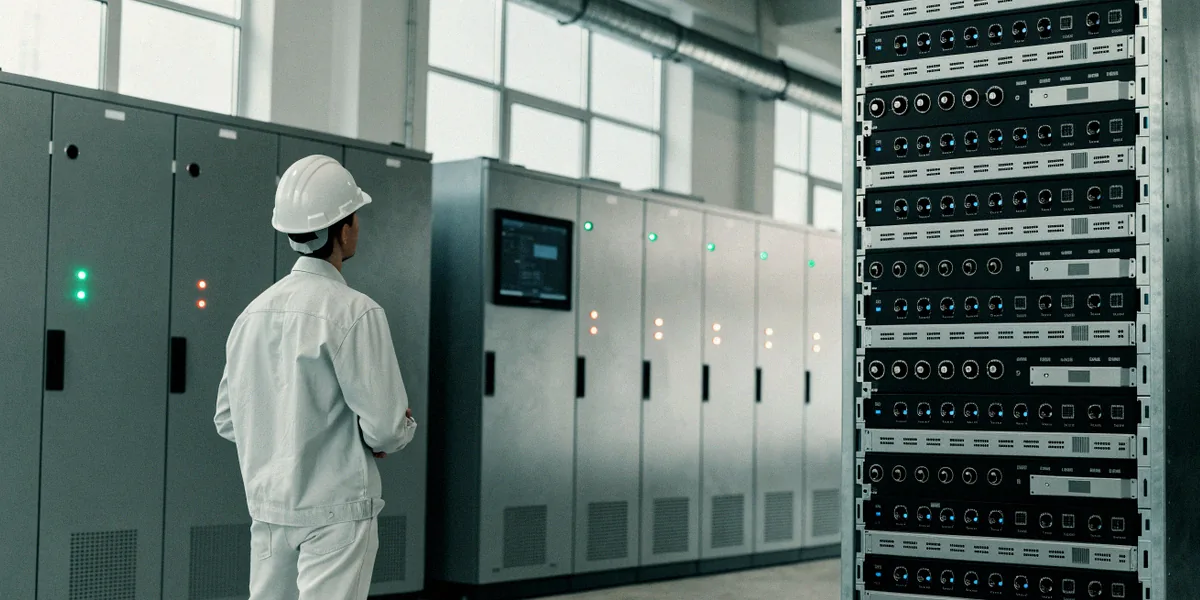
A digital substation replaces hard-wired analogue signal paths with a digital communication architecture. Instead of running thousands of copper cores from switchgear to protection panels, voltage and current measurements are digitised at source and transmitted over fibre using the IEC 61850 process bus. Non-conventional instrument transformers (NCITs) — optical or electronic sensors rather than iron-core transformers — feed merging units, which package the sampled values into Ethernet frames. National Grid has trialled this architecture at sites in England and Wales, while SSEN’s £10m digital substation project in Scotland has demonstrated the approach on a live distribution network.
From Copper Wiring to Fibre: The IEC 61850 Process Bus
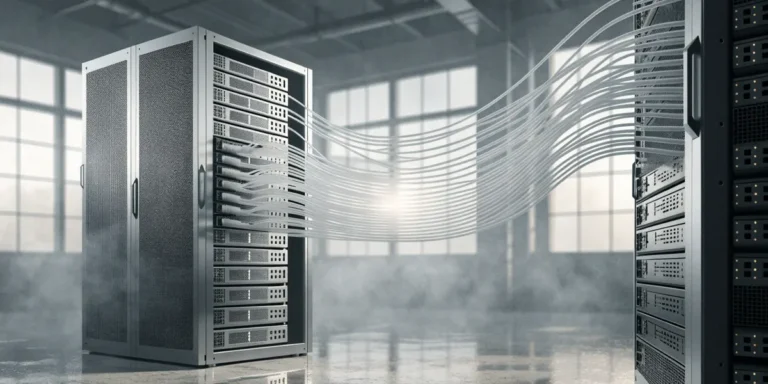
The process bus is the backbone of the digital substation. It carries sampled values from merging units to protection and control devices, and carries GOOSE (Generic Object Oriented Substation Event) messages for fast tripping and interlocking. A single fibre pair can replace hundreds of copper connections, which dramatically reduces installation time, cable trays and termination risk. For utilities wrestling with constrained substation buildings and rising copper prices, that’s an attractive proposition.
Key Components: Merging Units, Intelligent Electronic Devices, and GOOSE
Three building blocks do most of the work in a digital substation:
- Merging units — digitise analogue outputs from conventional or non-conventional instrument transformers and publish them on the process bus.
- Intelligent electronic devices (IEDs) — modern protection, control and monitoring devices that subscribe to process bus data and publish GOOSE messages.
- GOOSE messaging — peer-to-peer Ethernet communication used for protection trips, interlocking and status exchange, typically achieving transfer times under 4 ms.
The Benefits We’re Seeing in UK Projects
The business case for digital substations rests on three pillars: lower capital and installation cost, faster and more flexible protection, and richer data for smart grid operations. UK Power Networks’ flexible digital substation in London has shown how a modular architecture can be deployed in space-constrained urban sites, while SP Energy Networks’ digital substation pilots in Scotland have demonstrated measurable reductions in commissioning time.
Cost and Space Savings: Less Copper, Fewer Panels
Removing copper wiring typically cuts secondary cabling by 60–80% on a like-for-like bay. That translates into smaller cable trenches, fewer marshalling kiosks and lighter civil works. Because IEDs can be distributed closer to primary plant, utilities also need fewer large protection panels — a real advantage when retrofitting into existing buildings where floor space is at a premium.
Faster Protection and Interoperability with GOOSE
GOOSE-based protection schemes can trip breakers in a few milliseconds, faster than many conventional hard-wired schemes, and they make it far easier to implement busbar protection, breaker failure and interlocking logic in software rather than wiring. When IEC 61850 is implemented properly, IEDs from different manufacturers can exchange GOOSE messages on the same network — though as we explain below, that interoperability is not automatic.
Enhanced Monitoring for Smart Grid Integration
Every sampled value and status change on the process bus is available for analytics. That means better fault recording, condition monitoring of primary plant, and a natural interface to active network management and demand-side response platforms. For distribution network operators preparing for flexibility markets and Distribution System Operator (DSO) roles, this data layer is not optional — it’s foundational.
Challenges Holding Back Widespread Adoption
Despite the momentum, digital substations are not yet a default choice for every project. National Grid’s IEC 61850 rollout has highlighted practical friction around multi-vendor interoperability, and the UK’s Energy Digitalisation Taskforce has flagged cyber resilience and data governance as systemic risks for the whole energy sector.
Interoperability and Legacy System Integration
IEC 61850 is a standard, not a guarantee. Different vendors interpret optional features, naming conventions and engineering tools differently, and older Edition 1 devices do not always play nicely with Edition 2 systems. Retrofitting digital IEDs into substations with legacy SCADA, protection and telecontrol assets adds another layer of complexity — protocol gateways and careful signal mapping are usually required.
Cybersecurity and Network Resilience
Once protection depends on Ethernet, the network becomes safety-critical infrastructure. GOOSE and sampled values are time-sensitive and must be secured without adding latency. That means VLAN segmentation, IEC 62351 security controls, strict change management and continuous monitoring. A compromised process bus is not just a data breach — it’s a potential outage.
Skills Gap and Workforce Training
Engineers who can configure IEC 61850 SCL files, troubleshoot GOOSE traffic and commission merging units are in short supply. Utilities and their contractors are competing for the same small talent pool, and university programmes have been slow to catch up. Without sustained investment in training, digital substation rollouts will keep slipping behind schedule.
Regulatory and Standards Landscape in the UK
The regulatory framework is broadly supportive. Ofgem’s RIIO-2 framework explicitly funds smart grid innovation and network digitalisation, and the Energy Networks Association (ENA) coordinates industry positions through the Smart Grid Forum and related working groups.
Ofgem’s RIIO Framework and Digitalisation Incentives
Under RIIO-2, network operators can recover investment in digital substation technology where they can demonstrate customer benefit — typically through improved reliability, faster restoration or lower whole-life cost. The Strategic Innovation Fund and Network Innovation Allowance have part-funded several UK digital substation pilots, including work by SP Energy Networks and UK Power Networks.
IEC 61850 Edition 2.1 and UK Compliance
IEC 61850 Edition 2.1 adoption by UK utilities is now well underway, with Edition 2.1 clarifying interoperability requirements, adding new logical nodes and tightening conformance testing. Most new UK transmission projects now specify Edition 2.1 compliance, and the ENA’s technical documentation increasingly references it for distribution-connected assets.
What Our Team Recommends for UK Utilities
Based on the trials we’ve reviewed — including ScottishPower and National Grid digital substation programmes — we think the sensible path is incremental rather than big-bang.
Pilot First, Scale Later
Start with a single bay or a non-critical substation, prove the architecture, and capture lessons on configuration management, testing and operations. ScottishPower’s staged approach and National Grid’s phased trials both show that early pilots de-risk later rollouts far more effectively than trying to standardise everything upfront.
Invest in People and Cybersecurity
Budget for training alongside hardware. Build an internal IEC 61850 competency centre, send engineers on vendor-neutral SCL and GOOSE troubleshooting courses, and treat cybersecurity as a design discipline rather than a compliance afterthought. Use GOOSE for interlocking and fast tripping where it adds clear value — not simply because it’s available.
Digital substations are not a question of if, but when. The UK’s smart grid ambitions depend on them. Success will come from standards discipline, realistic piloting and a workforce that genuinely understands IEC 61850 — not from treating the technology as a silver bullet.
FAQ
What is a digital substation?
A digital substation uses IEC 61850 process bus and station bus communications, merging units and intelligent electronic devices to replace most conventional copper wiring with fibre. Analogue measurements are digitised at source and shared as sampled values, while protection and control signals travel as GOOSE messages.
Is IEC 61850 mandatory for UK substations?
It is not legally mandatory, but it is increasingly specified by National Grid, SSEN, UK Power Networks and SP Energy Networks for new and upgraded substations. IEC 61850 Edition 2.1 is the current reference for most UK transmission and distribution projects.
What are the main benefits of digital substations?
The biggest gains are reduced copper cabling and panel count, faster GOOSE-based protection, easier interlocking, and far richer data for monitoring and smart grid applications such as active network management and flexibility markets.
What are the biggest risks?
Interoperability between vendors, cybersecurity of the process bus, integration with legacy systems, and a shortage of engineers trained in IEC 61850 configuration and testing. Each of these needs deliberate mitigation during project planning.
How should a UK utility start with digital substations?
We recommend a pilot on a single bay or non-critical site, paired with a structured training programme and a clear cybersecurity architecture. Use the pilot to validate SCL engineering, GOOSE performance and operational procedures before scaling across the network.